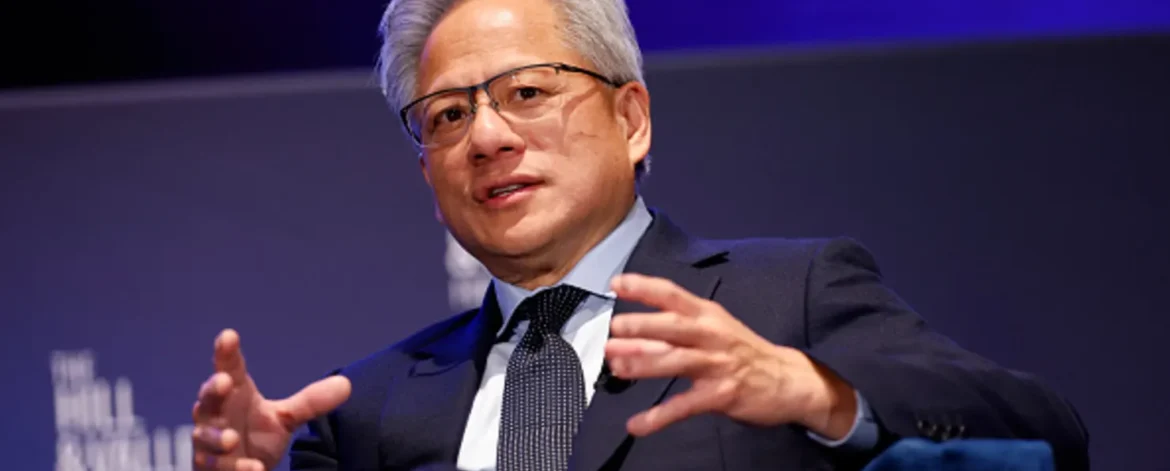
If Nvidia CEO Jensen Huang were a student today, he says he’d fully embrace generative AI to build a strong and successful career.
“The first thing I’d do is learn AI,” Huang shared during a January episode of the Huge Conversations podcast with Cleo Abram, referencing tools like ChatGPT, Gemini Pro, and Grok.
He emphasized that working effectively with AI is similar to becoming skilled at asking the right questions. “Prompting AI is like an art—it requires more than random queries. You need some expertise in how to interact with it meaningfully,” Huang explained.
To illustrate, he compared it to entrepreneurship. If someone vaguely asks, “Tell me about your business,” it’s hard to answer. But if they specify, “Can you explain the first steps to launching an online retail business?” you’re more likely to provide a useful response.
The same principle applies to AI. Think of AI like a smart child, advised Kelly Daniel, AI prompt director at Lazarus, in a CNBC Make It article. “You’re speaking to a bright kid who wants to help, but they lack your experience and context. It’s your job to guide them by giving that context,” Daniel wrote.
She recommended structuring prompts clearly—using bullet points or step-by-step instructions rather than long paragraphs—and including examples to make your intentions clearer.
Here’s an example of a strong AI prompt based on her guidance:
I need to give a keynote speech at my company’s annual conference. I want it to sound like early Bill Gates at Microsoft. The speech should:
- Congratulate the team on a strong Q1
- Highlight our progress in marketing and media strategy
- Introduce new productivity goals and inspire the team to achieve them
Huang’s advice is especially timely, as only 11% of Americans aged 14 to 22 report using generative AI weekly, according to a 2024 study from the Harvard Graduate School of Education, Common Sense Media, and Hopelab. Yet, LinkedIn’s 2025 Work Change report notes that 70% of job-related skills are expected to evolve by 2030 due to AI.
That’s why mastering the art of prompting—and learning how to ask smarter questions—will remain a valuable skill across all industries. Huang concluded, “If I were a student today, whether I’m studying math, science, chemistry, biology—it doesn’t matter what the field or profession is—I’d be asking myself: How can I use AI to do my job better?”